Detailed Guide to Texas Home Builders
Choosing the Right Texas Home Builder
The best Texas home builders match your land, budget, design goals, and communication needs – then put each promise in a clear contract. Before choosing one, compare its experience with your type of project, ask how often you will receive construction updates, review customization limits and warranty terms, and confirm who will handle questions after closing.
Texas buyers can choose from production builders in planned neighborhoods, builders for large or rural homesites, and custom builders who guide the home from early design through final walk-through. Communities may offer shared amenities, schools, and ready utilities, while building on private land can provide more freedom but often requires added planning for site work, utilities, drainage, and septic systems.
Modern new homes also increasingly include energy-saving construction, smart-home controls, and flexible financing incentives. Just as important, a strong builder uses clear contracts and follows Texas requirements, including the Residential Construction Liability Act process for construction disputes.
I am Melanie Brewer, a Dallas-based real estate and construction professional with experience in residential sales, land development, commercial construction oversight, and leading my family’s building company. That background helps me explain how Texas home builders work and what homeowners should look for before committing to a new custom home.

Types of Construction Offered by Texas Home Builders
Finding the right path to your dream property starts with understanding the primary construction models available in our state. Texas home builders generally operate across two main delivery methods: production volume building and fully bespoke custom construction. Each method addresses specific timelines, budgets, architectural flexibility, and property types.
When planning to Build a Home, defining whether your lifestyle calls for a master-planned neighborhood setting or a private rural retreat will determine the right construction approach.
| Feature Category | High-Volume Production Builders | Bespoke Custom Builders |
|---|---|---|
| Architectural Flexibility | Pre-set catalog plans with minimal layout changes | Fully personalized, ground-up architectural drafting |
| Lot Placement | Builder-owned suburban subdivision lots | Private acreage, infill parcels, or client-owned land |
| Material Selections | Standard packages with tiered upgrade catalogs | Unlimited sourcing of premium finishes and fixtures |
| On-Site Management | High-volume superintendents juggling dozens of builds | Dedicated site managers with hands-on oversight |
| Energy & Performance | Baseline code compliance with standard options | High-performance spray foam, advanced HVAC, low HERS |
| Build Timeline | Typically 5 to 8 months | Typically 8 to 14+ months depending on complexity |
Master-Planned Community Development
Master-planned neighborhoods offer structured living with pre-installed infrastructure. When you purchase in these developments, the developer has already paved roads, established municipal utility connections, and secured zoning.
These developments often feature lifestyle amenities such as resort-style swimming pools, fitness centers, walking trails, and parks. Selecting home sites in established Communities with top-rated school districts or on-site elementary campuses provides everyday convenience while helping protect long-term property appreciation.
However, building in a planned neighborhood means navigating Homeowners Association (HOA) architectural guidelines. These covenants dictate allowable exterior color palettes, roof pitches, masonry percentages, and landscape designs. For homeowners seeking a turnkey environment with neighborhood shared spaces, master-planned developments remain an attractive option.
Build on Your Lot and Rural Acreage
Building on private acreage or rural properties offers expansive privacy, scenic views, and freedom from standard subdivision restrictions. Whether developing several acres in Waxahachie TX or settling near Venus TX, custom on-your-lot building requires dedicated civil preparation.

Before framing begins, acreage home construction involves several key site preparation stages:
- Geotechnical Soil Testing: Texas soils, particularly expansive clay formations, require soil borings and lab analysis to engineer a stable foundation.
- Topographical Grading & Drainage: Proper land contouring prevents water pooling and protects structural foundations during heavy Texas downpours.
- Private Utilities: Rural lots often require private water wells or connections to rural water supply corporations, alongside dedicated electrical service drops.
- On-Site Sewage Facilities (OSSF): Septic system design must match soil absorption rates and household size, requiring county health department permitting and certified engineering.
Navigating the Custom Architectural and Design Process
Building a high-end custom home transforms your ideas into a functional, enduring residence. Clear communication during pre-construction prevents costly revisions once framing begins.
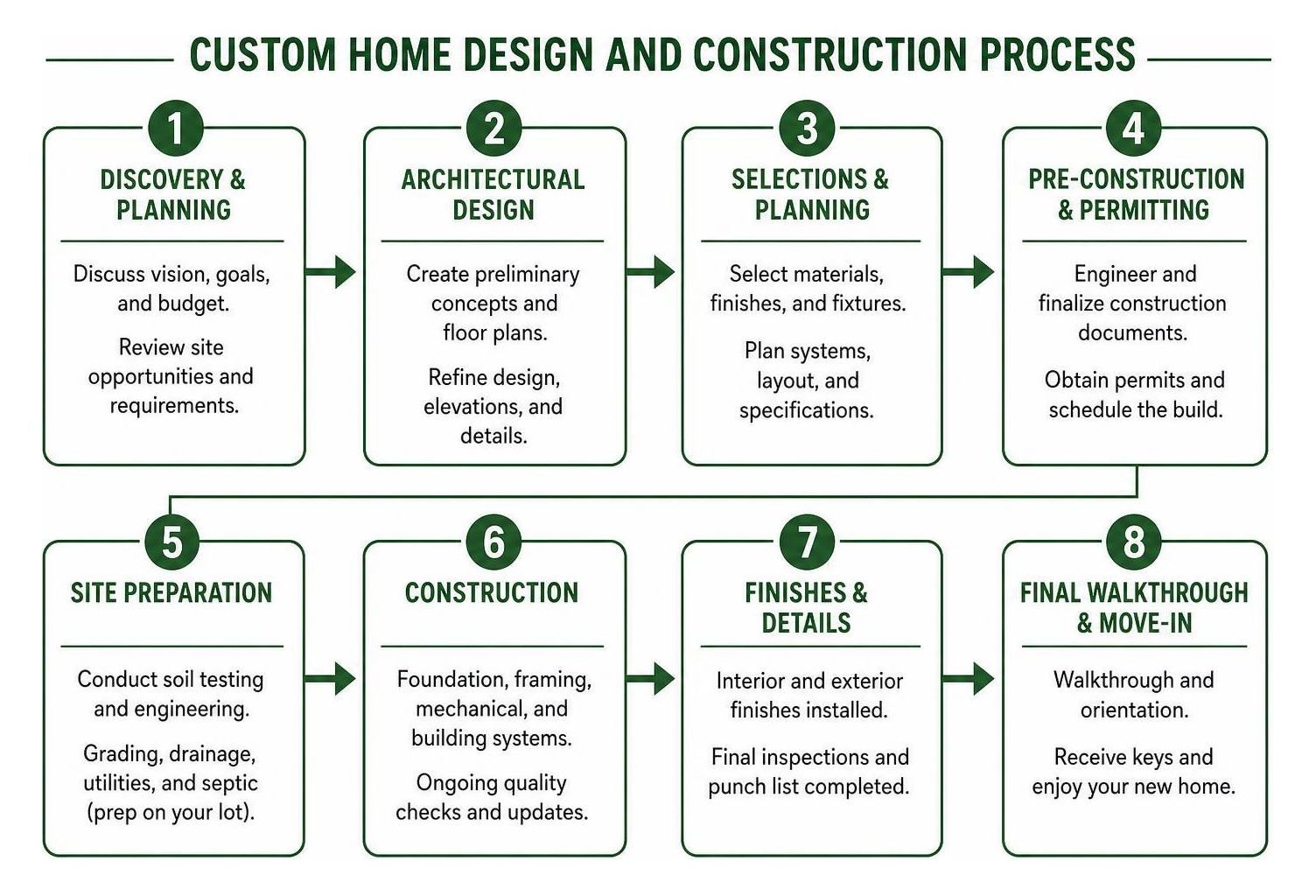
Understanding How It Works ensures you remain confident at every phase, from preliminary sketches to the moment you receive your keys. Exploring existing Tours & Floor Plans provides practical inspiration for open-concept layouts, ceiling treatments, and outdoor entertaining spaces.
Modern Construction Standards Used by Texas Home Builders
Today’s luxury residences combine timeless design with advanced building science. Integrating modern engineering into framing, mechanical systems, and insulation ensures lasting durability and indoor comfort during extreme summer temperatures.
Key Custom Features integrated into modern builds include:
- High-Performance Insulation: Complete open- or closed-cell spray foam encapsulation creates a conditioned attic space, significantly lowering Home Energy Rating System (HERS) scores and reducing electric bills.
- Zoned Smart Automation: Whole-home Z-Wave automation connects smart thermostats, security cameras, access locks, and architectural lighting to intuitive mobile controls.
- In-Wall Pest Defense: Built-in tubing systems within interior wall cavities allow pest treatments to be applied from exterior service ports without introducing chemicals into living areas.
- High-Efficiency HVAC: Multi-stage heat pumps and variable-speed air handlers maintain consistent humidity control and balanced airflow throughout every room.
Why Remote Buyers Rely on Texas Home Builders with Transparent Management
Relocating across Texas or moving from out of state requires transparent project management. Long-distance buyers need full visibility into on-site progress without having to visit the job site every week.

Professional custom builders use dedicated project management portals to bridge geographic distance. Construction superintendents upload weekly photo logs, track budget milestones, schedule design sign-offs, and conduct live video walk-throughs during pre-drywall and trim stages. This open communication ensures your build stays on schedule and aligns with your approved architectural plans.
Texas Building Regulations, Contracts, and Warranties
Residential construction in Texas operates under clear statutory standards that protect both property owners and builders. Having formal contracts and documented warranty guidelines establishes clear accountability from groundbreaking through move-in day.
The Texas Association of Builders (TAB) plays an essential role in setting standard residential practices across the state. TAB’s 2025-27 Residential Construction Contracts Package provides standard contracts that comply with state statutes, incorporating legislative enactments from the 89th Texas Legislative Session and recent court precedents alongside clear warranty standards.
Residential Construction Liability Act (RCLA) Compliance
The Texas Residential Construction Liability Act (RCLA), codified in Chapter 27 of the Texas Property Code, governs how construction disputes, alleged defects, and warranty claims are handled.
Key legal provisions under the RCLA framework include:
- Written Statutory Notice: Homeowners provide formal written notice detailing specific construction defects before filing legal action.
- Inspection Rights: The builder has a defined 35-day window to inspect the property and evaluate the conditions noted in the claim.
- Settlement & Repair Offer: The builder has a statutory timeframe (typically 45 days after inspection) to make a written offer to repair the issues, settle financially, or provide an engineering remedy.
- Predictable Dispute Resolution: The RCLA encourages structured settlement discussions, helping avoid costly litigation while ensuring structural issues are professionally assessed and resolved.
Express Limited Warranties and Structural Coverage
A solid construction contract should always include a comprehensive Express Limited Home Warranty. This document defines specific performance standards for materials, installations, and structural components.
Standard Texas warranty coverage typically follows a 1-2-10 tier:
- Year One (Workmanship & Materials): Covers cosmetic finishes, drywall joint integrity, paint, cabinetry, interior trim, siding, and hardware adjustments.
- Year Two (Mechanical Delivery Systems): Protects direct supply lines, electrical wiring, ductwork routing, and internal plumbing systems behind walls.
- Years Three to Ten (Major Structural Components): Guarantees the structural integrity of load-bearing footings, reinforced engineered foundation slabs, structural beams, and roof truss systems.
Our team at Killian Custom Homes stands behind every residence we build, pairing family-owned craftsmanship with responsive post-closing warranty support.
Financing Strategies, Flex Cash, and Incentives
Financing a custom residence requires selecting the right mortgage product for your build type. Production homes often use standard end-loan mortgages, while custom projects on private land rely on construction-to-permanent loans.
If you are exploring ready-to-own properties, reviewing our current inventory of Available Homes can help you compare move-in timelines and evaluate existing market incentives.
Maximizing Builder Incentives and Rate Buydowns
In today’s residential market, builders and preferred lenders frequently provide financial incentives to help manage borrowing costs:
- Mortgage Rate Buydowns: Buyers can apply builder incentive credits to purchase temporary or permanent interest rate reductions, significantly lowering monthly payments.
- Flex Cash Allocations: Flexible funds allow buyers to decide whether to offset closing costs, buy down interest rates, or add luxury interior design upgrades.
- Design Center Credits: Financing incentives can also be applied toward premium kitchen appliances, upgraded quartz countertops, or outdoor kitchen extensions.
Protecting Long-Term Investment Value
When evaluating new construction, look beyond upfront price-per-square-foot metrics to evaluate overall cost of ownership:
- Property Tax Structures: Look into local tax rates, municipal utility districts (MUDs), or Public Improvement Districts (PIDs). Communities without PID assessments save homeowners hundreds of dollars each month in tax overhead.
- School District Ratings: Properties within reputable public school districts maintain strong resale demand and hold value through shifting market cycles.
- Architectural Longevity: Timeless elevations constructed with durable Texas limestone, brick, and high-efficiency windows require less long-term maintenance and appeal to future buyers.
Frequently Asked Questions About Texas Home Building
How long does it typically take to build a custom home in Texas?
Building a personalized custom home in Texas generally takes between 8 and 14 months once construction begins. The timeline depends on architectural complexity, site preparation requirements, municipal permitting speeds, and weather conditions. Custom drafting and engineering reviews usually take an additional 6 to 12 weeks during the pre-construction phase before foundation excavation starts.
What is the difference between building in a master-planned community versus on private land?
Building in a master-planned community offers finished infrastructure, paved roads, pre-run municipal utilities, and neighborhood amenities, all governed by HOA design guidelines. Building on private acreage gives you complete freedom over your home’s layout, outbuildings, and land use, but requires independent site prep, including soil testing, land clearing, well drilling, electrical extensions, and septic system engineering.
What legal protections do Texas homeowners have during residential construction?
Texas homeowners are protected under Chapter 27 of the Texas Property Code, known as the Residential Construction Liability Act (RCLA). This statute establishes clear procedures for addressing alleged defects, formal inspections, and builder repair offers. Working with builders who use standard contracts from the Texas Association of Builders provides added protection through explicit express warranties covering workmanship, mechanical distribution, and structural integrity.
Conclusion
Building a custom home in Texas is an exciting milestone. Whether you choose a quiet acreage property or an established master-planned neighborhood, partnering with an experienced, transparent builder ensures your vision becomes a reality. Clear contracts, energy-efficient construction, and proven project management keep the build on track and provide peace of mind long after closing.
At Killian Custom Homes, we take pride in delivering luxury residences built with personalized attention, family-owned values, and enduring craftsmanship. We guide you through every step of the journey—from initial design and lot preparation to final walk-throughs and ongoing warranty support. Contact our team today to start planning your custom Texas home.